
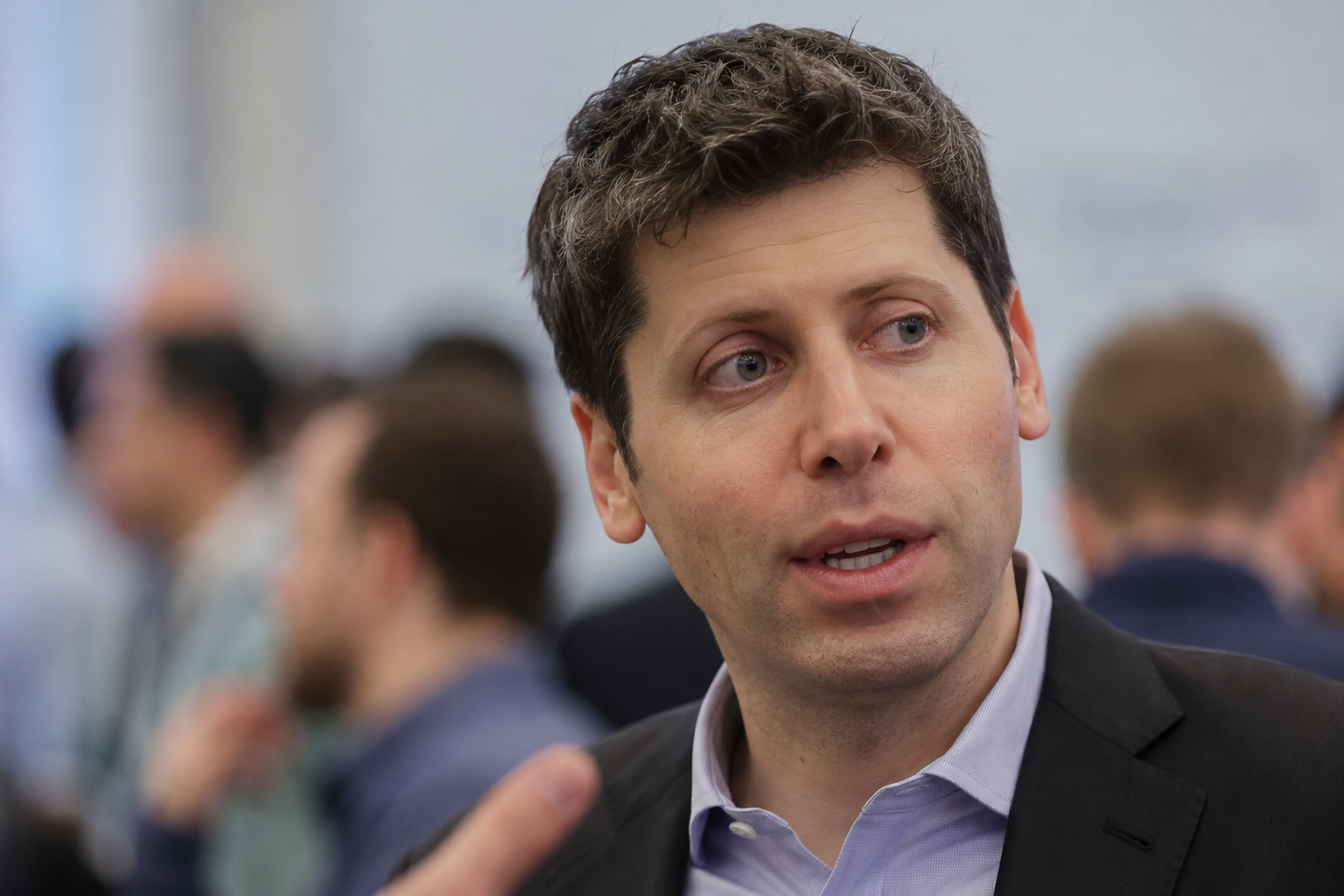
OpenAI Chief Executive Officer Sam Altman said on Tuesday that the rapid growth and adoption of artificial intelligence had not led to the level of job losses he initially feared, particularly among entry-level white-collar workers.
Speaking at a conference hosted by the Commonwealth Bank of Australia in Sydney, Altman said his earlier concerns over the impact of AI on global employment had not fully materialised.
Altman said he and other executives at OpenAI had been roughly right about the technological advancements predicted when ChatGPT launched in 2022.
However, he admitted they had been “pretty wrong” regarding the broader social and economic implications.
“I’m delighted to be wrong about this. I thought there would have been more impact on entry-level white-collar jobs being eliminated by now than has actually happened,” Altman told CBA Chief Executive Matt Comyn during the interview.
He added that his understanding of the situation had evolved.
OpenAI chief reflects on earlier concerns
Altman acknowledged that earlier warnings about AI’s potential impact on employment had contributed to widespread concerns surrounding the technology.
“People are like ‘oh you could have saved the world a lot of fear mongering and a lot of doom and gloom,’ but at the time I was like ‘I see this is a real risk we should probably talk about it’ and it still may,” he said.
Although Altman did not provide specific employment data during the discussion, he has previously spoken publicly about the possibility of industry-wide workforce reductions driven by advances in AI technology.
Several major global companies, including HSBC, Amazon, Standard Chartered, and Commonwealth Bank of Australia, have announced that some roles within their organisations were being replaced or reshaped through the use of AI tools and automation.
‘Human part’ of work still matters, says Altman
Altman said his views on AI and employment had shifted after recognising that many jobs involve human interaction that technology still cannot fully replicate.
He explained that he had experimented with using AI systems to respond to Slack and email messages before deciding to personally handle some communications again.
“I had it reply to messages, saying ‘this is Sam’s AI,’ and it was an amazing example to me of we really do care about people,” he said.
Altman added that human interaction remained an important part of communication and professional relationships.
“We really do care about our interactions with people, and this thing, which is a huge amount of my time, is not something that I can imagine myself outsourcing to an AI anytime soon,” he said.
That experience, Altman noted, changed his perspective on how AI could affect the labour market over the long term.
The post OpenAI CEO downplays fears of AI-driven jobs apocalypse appeared first on Invezz