
Stanley Druckenmiller just made a few portfolio moves that Wall Street is watching rather closely.
The billionaire founder of Duquesne Family Office – widely regarded as the most influential active money manager since Warren Buffett’s retirement – has completely exited his position in Alphabet and piled into five AI hardware stocks instead.
His latest 13F filing, covering holdings as of March 31st, reveals a bet on the physical infrastructure that powers artificial intelligence (AI), not the software giants who ride it.
Names Druckenmiller has invested in include SanDisk, Micron, Seagate, Broadcom, and Arm.
Why Druckenmiller walked away from Google stock
Duquesne has offloaded its entire stake in Alphabet, selling all 385,000 Class A shares worth nearly $153 million – a position the billionaire had just built up by 277% in the prior quarter.
The exit looks like disciplined profit-taking, given Google, in the two-plus quarters Druckenmiller held the stock, appreciated by more than 50%.
Following this surge, Google shares are trading at roughly 28x forward earnings, versus 17x only just a year ago.
Druckenmiller has also been openly skeptical about AI valuations – saying he believes “AI might be a little overhyped now” and that “AI could rhyme with the internet.”
And when the valuation no longer fits the thesis, the billionaire moves on – fast.
Why he loaded up on SanDisk stock
Duquesne opened a new position in SanDisk, buying 38,155 shares worth about $24.2 million – and the timing was exceptional.
SNDK’s Q3 report was the giveaway; revenue hit $6 billion versus $4.7 billion estimates, up 251% year-over-year, with data center sales of $1.5 billion, up 645% year-over-year.
CEO David Goeckeler described the results as “a fundamental inflection point,” citing a structural shift toward AI inference workloads that demand high-speed NAND flash at scale.
With hyperscalers locking in multi-year supply agreements, SanDisk is no longer just a consumer storage brand – it has become a critical node in the AI infrastructure stack.
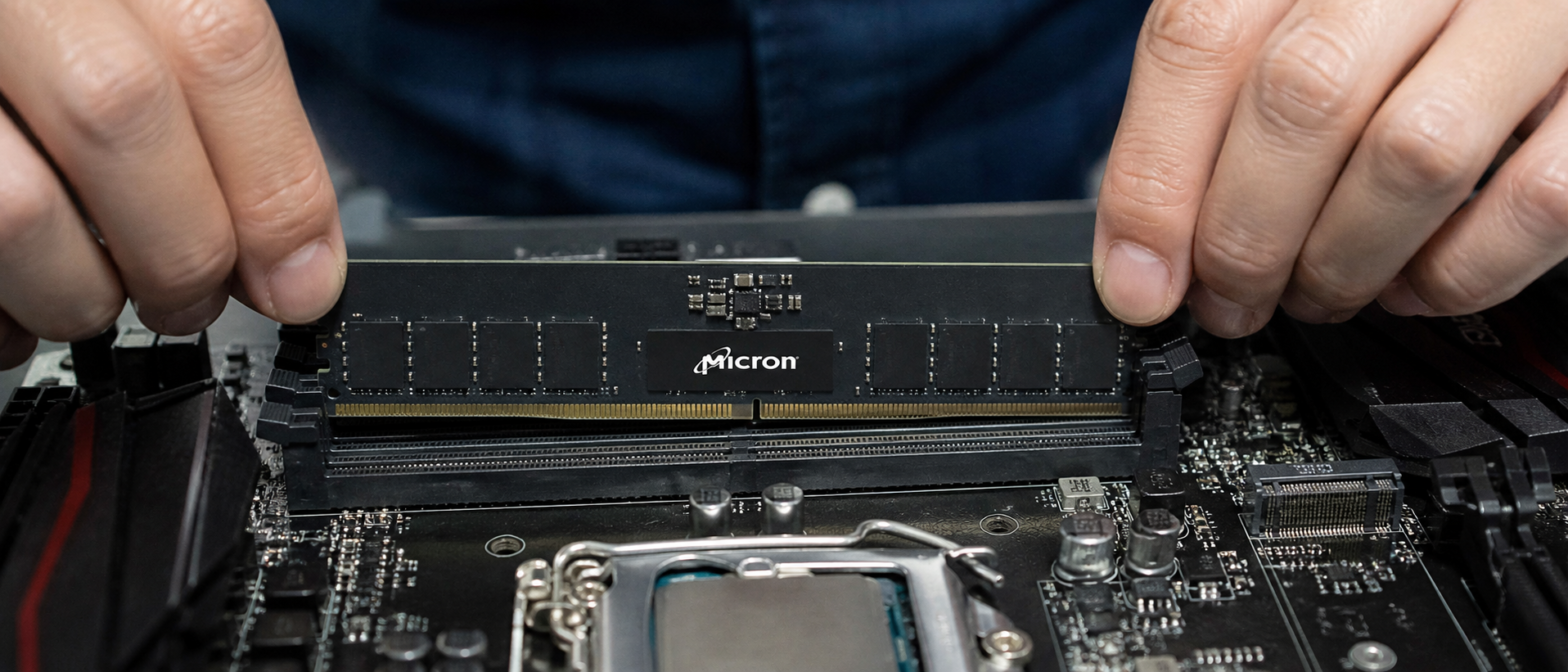
Why Micron shares are attractive for Druckenmiller
Druckenmiller’s bet on Micron stock may prove to be his sharpest call of the quarter.
Micron delivered Q2 revenue of $23.9 billion – a 196% increase year-over-year – cementing its position as one of the biggest beneficiaries of the AI boom.
The numbers didn’t just beat estimates – they demolished them. Earnings per share (EPS) came in at $12.07, far above the $9.33 consensus, while revenue exceeded forecasts by nearly $3.7 billion.
And the outlook is even more striking: for the current quarter, MU guided for about $33.5 billion in revenue, implying year-over-year growth of over 200%.
As CEO Sanjay Mehrotra put it, Micron is an essential AI enabler and the only US-based memory manufacturer – a strategic asset in a supply-constrained world.
His thesis on owning Seagate stock
Old-fashioned spinning hard drives sound like a strange AI play, but Druckenmiller saw something others missed; Duquesne bought 50,700 Seagate shares valued at about $19.9 million.
The thesis is playing out emphatically. Seagate’s Q3 delivered revenue of $3.1 billion – up 44% year-over-year, with adjusted earnings per share of $4.10 – far ahead of analyst expectations.
Better yet, demand visibility is “extraordinary”: nearline capacity is nearly fully allocated through calendar 2027, with build-to-order contracts being finalized through the end of fiscal 2027.
Moreover, the top three global cloud providers’ remaining purchase obligations nearly doubled to about $1.1 trillion; Seagate is essentially sold out well into next year.
Why Druckenmiller invested in Broadcom shares
Druckenmiller initiated a significant new stake in Broadcom, purchasing roughly 196,000 shares worth $60.7 million – the largest single new position in the batch.
Broadcom is the dominant designer of custom AI accelerators for hyperscalers like Google and Meta, offering a cost-effective alternative to Nvidia’s off-the-shelf GPUs.
Q1 AI revenue hit $8.4 billion, up 106% year-over-year, above the company’s own forecast – and the acceleration isn’t slowing: AVGO guided for AI semiconductor revenue of $10.7 billion in Q2, with total Q2 revenue expected to reach $22 billion, up 47% year-over-year.
CEO Hock Tan has stated plainly that AI revenue growth is accelerating, with the company eyeing $100 billion in cumulative AI-related sales by 2027.
Here’s why he bought ARM shares as well
Rounding out the five picks is Arm Holdings, the British chip-design firm whose instruction set architecture sits inside virtually every modern processor.
Duquesne opened a new position of 106,700 ARM shares worth about $16.1 million.
ARM is benefiting structurally from AI’s spread across every compute environment.
For the full fiscal year, Arm posted record revenue of $4.9 billion, with royalty revenue up 21% and licensing revenue up 25%, its third consecutive year of more than 20% revenue growth since going public.
Most tellingly, data center royalties more than doubled year-over-year as cloud companies increasingly turn to Arm-based custom chips.
With AI moving from training to inference at the edge and in data centers alike, Arm’s architecture is everywhere – and Druckenmiller is betting it stays that way.
The post Stanley Druckenmiller just sold Google shares to load up on five AI hardware stocks appeared first on Invezz