
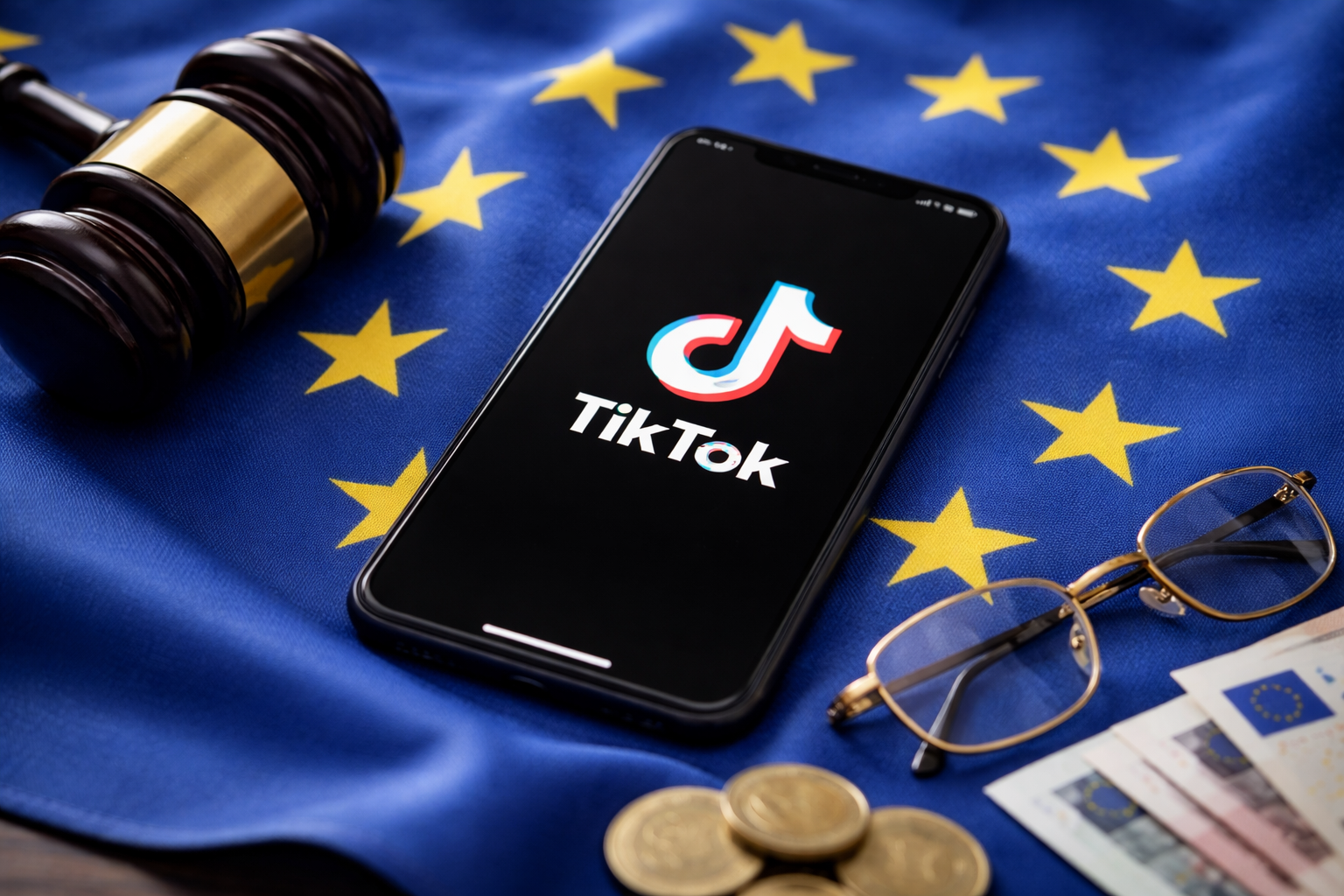
The EU has escalated its investigation into TikTok over concerns about the safety and privacy of teenage users.
The European Commission, the EU’s executive branch, announced preliminary findings against the ByteDance-owned social media platform on Friday under the Digital Services Act (DSA).
The Commission said TikTok’s account settings for users under the age of 18 could allow their profiles to be easily found and viewed by other people online.
It also raised concerns about the accessibility of teenagers profile photos.
According to a statement from the Commission, teen users’ profile photos “remain accessible to anyone, including users without a TikTok account.”
The Commission said the platform’s settings could expose young users to several online risks.
These include unwanted contact, cyberbullying and predatory behavior.
The preliminary findings represent another step in the EU’s broader scrutiny of TikTok.
The investigation was launched in February 2024 and covers the company’s compliance with the bloc’s digital rules.
EU raises concerns over teen account visibility
The European Commission’s concerns focus on the way TikTok’s teen accounts are configured and how easily other people can access information associated with young users.
DSA guidance stipulates that children’s accounts on social media platforms should not be viewable in a way that could expose minors to unnecessary risks.
The Commission’s preliminary findings suggest that TikTok’s current settings may not fully meet those expectations.
The Commission said TikTok’s settings continue to expose teenage users to risks linked to their visibility and accessibility on the platform.
The findings are preliminary and do not represent a final decision against TikTok.
The company will have an opportunity to respond to the Commission’s concerns and propose measures to address the issues raised.
TikTok defends its privacy and safety measures
TikTok rejected the suggestion that its teen account protections are insufficient.
A company spokesperson said the platform’s “teen accounts” feature includes 50 privacy and safety settings that have been reviewed by experts.
The spokesperson also pointed to TikTok’s policies, which state that children’s accounts are private by default.
“Protecting minors online is a goal we share, and we are committed to building on our strong track record of continuous improvement,” the spokesperson said.
The company’s response indicates that TikTok intends to continue discussions with the European Commission as the investigation progresses.
TikTok could face significant financial penalties
The latest development increases pressure on TikTok as it continues to face scrutiny under the EU’s Digital Services Act.
TikTok will be able to defend itself during the process.
The company can also propose measures aimed at addressing the Commission’s concerns.
If TikTok fails to resolve the issues raised by the Commission, it could face fines under the DSA.
The rules allow penalties to reach as much as 6% of a company’s annual global sales.
The potential financial consequences add to the regulatory pressure facing the social media platform in the European Union.
TikTok is also facing two other EU investigations.
The company is separately subject to preliminary findings related to its alleged use of addictive design.
EU increases pressure on major online platforms
The Commission’s action against TikTok comes as EU authorities continue to use the DSA to scrutinize major online platforms.
In December, Elon Musk’s X was issued a €120 million ($137 million) penalty over deceptive design and a lack of transparency.
In May, Chinese e-commerce platform Temu was ordered to pay €200 million for failing to remove illegal products.
Earlier this week, Chinese e-commerce giant AliExpress was fined €550 million for the same breach.
The developments highlight the growing use of the DSA to hold large digital platforms accountable for their practices.
While the legislation is often viewed as a tool to address misinformation and counterfeit products, the European Commission has increasingly used the rules to push companies to strengthen protections for children and teenagers online.
For TikTok, the latest preliminary findings add another layer to its ongoing regulatory challenges in the European Union.
The company will now have the opportunity to respond to the Commission and seek to address the concerns before any final decision is made.
The post TikTok faces EU scrutiny over teen privacy and safety concerns appeared first on Invezz