
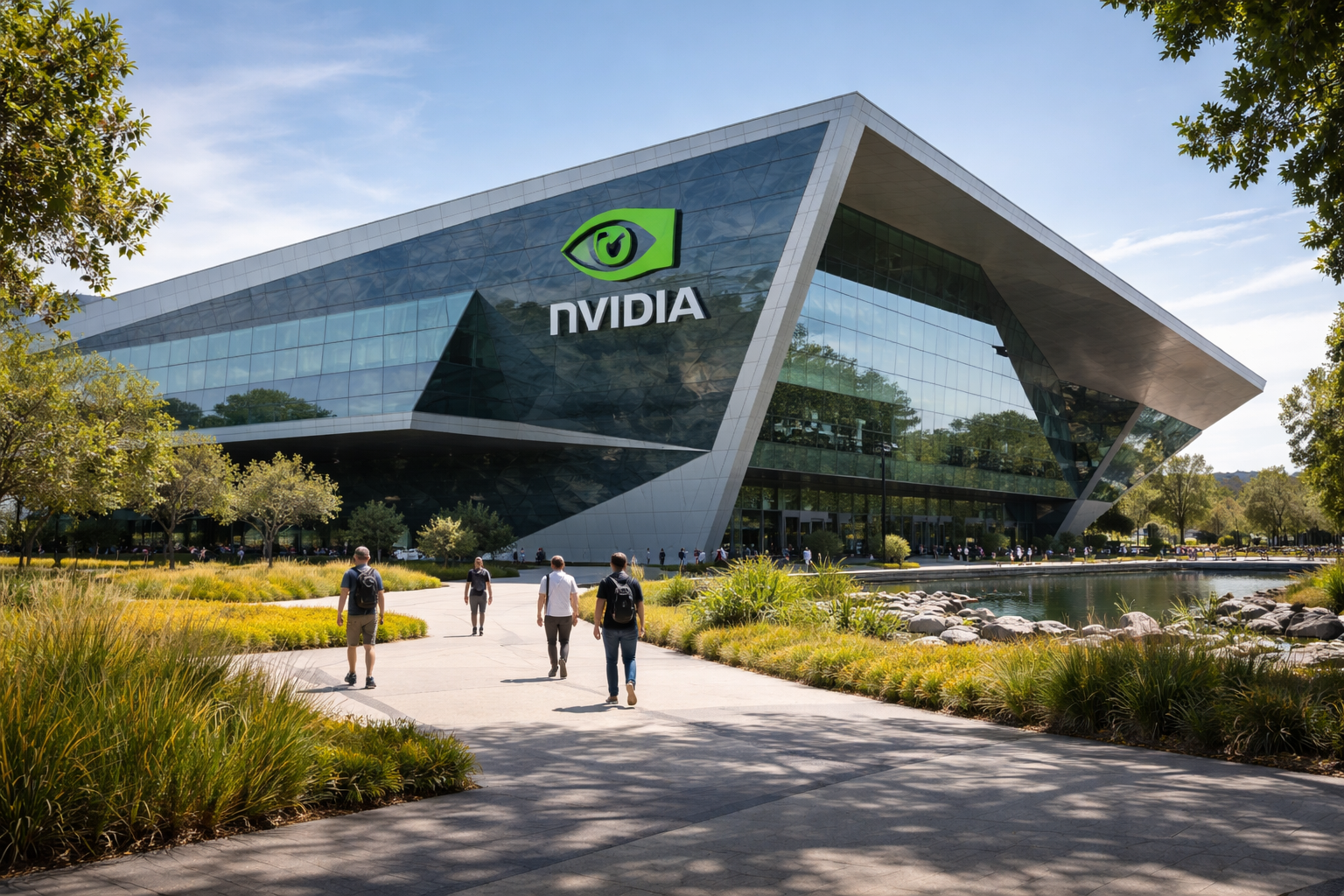
Nvidia (NVDA) shares fell in trading on Thursday even after Alphabet raised its capital expenditure guidance for 2026, as investors appeared to rotate toward memory and semiconductor specialists instead of the largest technology stocks.
Nvidia stock declined 2.18% in trading, snapping a 3-day winning streak, while Micron Technology and SK Hynix rose 2.5% and 2.8%, respectively.
The moves followed Alphabet’s quarterly earnings, in which the Google parent increased its 2026 capital expenditure guidance to between $195 billion and $205 billion, up from its previous forecast of $180 billion to $190 billion.
The revised spending outlook eased concerns that investment in artificial intelligence infrastructure could slow.
Much of the additional spending is expected to go toward expanding AI infrastructure, including chips and memory, benefiting suppliers across the semiconductor industry.
However, Nvidia did not immediately participate in the rally.
Alphabet shares also came under pressure, falling almost 6.3% despite reporting stronger-than-expected earnings, as investors focused on the company’s higher AI spending commitments.
Investors rotate toward chip and memory specialists
The market reaction suggested investors may be shifting away from the largest technology companies and toward more specialized AI hardware providers.
A recent trend had seen investors sell semiconductor stocks in favor of large technology companies.
Alphabet’s latest spending guidance appears to have reversed part of that trade, prompting renewed buying interest in memory manufacturers such as Micron and SK Hynix while weighing on Nvidia.
Although Nvidia remains one of the world’s leading AI chipmakers, its rapid rise to become one of the world’s most valuable public companies has increasingly positioned it alongside Big Tech companies rather than smaller semiconductor names.
Other technology giants also traded lower on Thursday morning, with Amazon falling 4.9% and Meta Platforms declining 4.3%.
Analysts remain bullish while options signal caution
Despite Thursday’s decline, longer-term sentiment toward Nvidia remains largely positive.
A Barchart analysis noted that the platform’s Technical Opinion indicator rates Nvidia as an “80% Strong Buy,” citing a strengthening short-term outlook.
Analysts also maintain an average price target of just over $304, supported by expectations for new semiconductor architectures and continued AI infrastructure spending.
However, the analysis also highlighted caution in the options market ahead of Nvidia’s second-quarter earnings, scheduled for Aug. 26.
According to the analysis, options traders are paying elevated implied volatility premiums for out-of-the-money put options expiring shortly after earnings, suggesting increased demand for downside protection.
Separately, a Motley Fool report argued that Nvidia remains attractive despite concerns over the sustainability of AI spending.
The report noted that Nvidia’s valuation metrics, including its price-to-earnings ratio and price-to-free-cash-flow ratio, are near five-year lows and below those of several other companies benefiting from AI spending.
It argued that Nvidia’s products have applications beyond artificial intelligence, pointing to previous demand from cryptocurrency mining and suggesting future opportunities in areas such as quantum computing.
The post Nvidia stock falls: why can’t it benefit from increased AI capex appeared first on Invezz