
Billionaire Philippe Laffont’s global investment firm Coatue Management executed a meaningful tactical portfolio rotation in the first quarter of 2026.
The hedge fund manager scaled back exposure to mega-cap artificial intelligence (AI) names, including Tesla, Oracle, and even Nvidia, and redirected capital into the deeply distressed Lucid stock.
Laffont’s repositioning highlights growing institutional anxiety over capex sustainability and near-term AI monetization.
By taking profit on premium tech stocks, the “Tiger Cub” billionaire is intentionally repositioning Coatue to exploit highly asymmetric, contrarian setups in the out-of-favour clean energy segment.
Why Laffont sold off AI stocks
Laffont’s most dramatic portfolio move was a clean exit from Oracle.
The billionaire liquidated his “entire position” after the enterprise software company raised its full-year capex guidance to $50 billion, aimed at funding infrastructure expansion.
In Q1, OpenAI – its marquee partners, which have taken on $1.4 trillion in data center commitments over the next eight years – also missed key revenue targets, drawing fresh scrutiny to ORCL’s lofty valuation.
Tesla fared little better. Coatue gutted roughly 96% of its position in the automaker after CEO Elon Musk tempered expectations around the commercial rollout of Tesla’s robotaxi fleet.
With TSLA also ramping up its own AI-focused capital spending, analysts warn of severe pressure on free cash flow and year-over-year cash generation.
Even Nvidia, the undisputed hardware backbone of the AI boom, wasn’t spared. Despite reporting strong Q1 earnings, Laffont trimmed his stake in Nvidia by 31%, representing disciplined risk management.
Why Laffont loaded up on Lucid stock
While Laffont was cutting exposure to AI’s biggest winners in early 2026, he was quietly making a very different kind of wager – one that few on Wall Street saw coming.
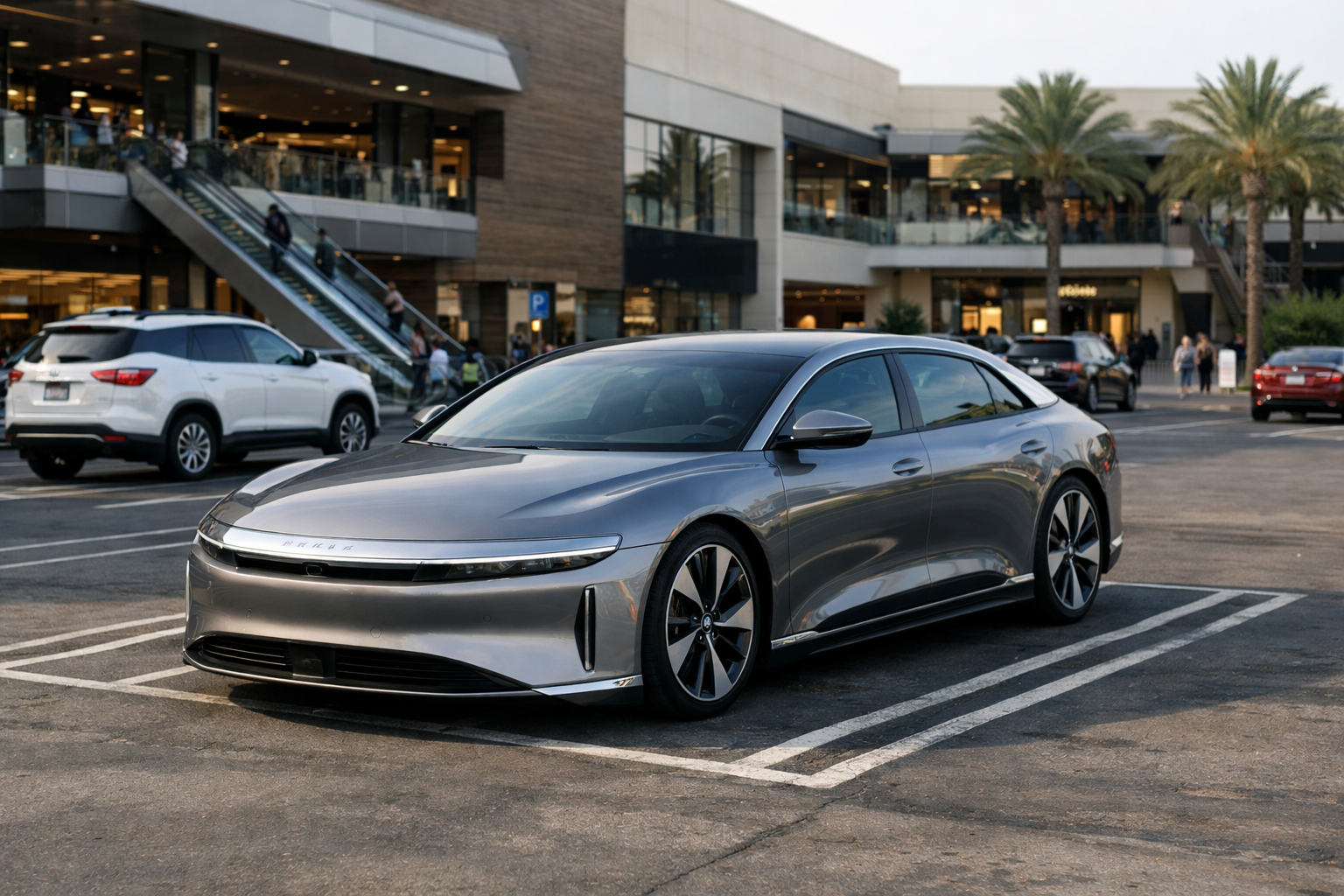
Coatue initiated a fresh position in Lucid Group – snapping up 295,300 shares worth roughly $2.8 million.
On the surface, it looks like an unlikely home for institutional capital.
The luxury electric vehicle maker has shed 94% of its value since going public in September 2020, and has lost nearly half its market cap in 2026 alone.
Still, for the billionaire hedge fund manager, the entry point appeared a bit too sweet to ignore.
His thesis rests on a macro view that beaten-down clean energy infrastructure is due for a re-rating – and recent geopolitical shocks have only sharpened that case.
The US-Iran conflict and the subsequent closure of the Strait of Hormuz are making strategists frame alternative energy less as a climate policy and more as a national security priority, lending immense urgency to domestic EV infrastructure.
Wall Street analysts also seem to agree with Laffont on LCID shares.
While the consensus rating on Lucid stock sits at “hold” only, the mean price target of nearly $11 indicating potential upside of more than 60% from current levels.
The post Billionaire dumps TSLA, ORCL, NVDA, loads up on beaten-down EV stock appeared first on Invezz