
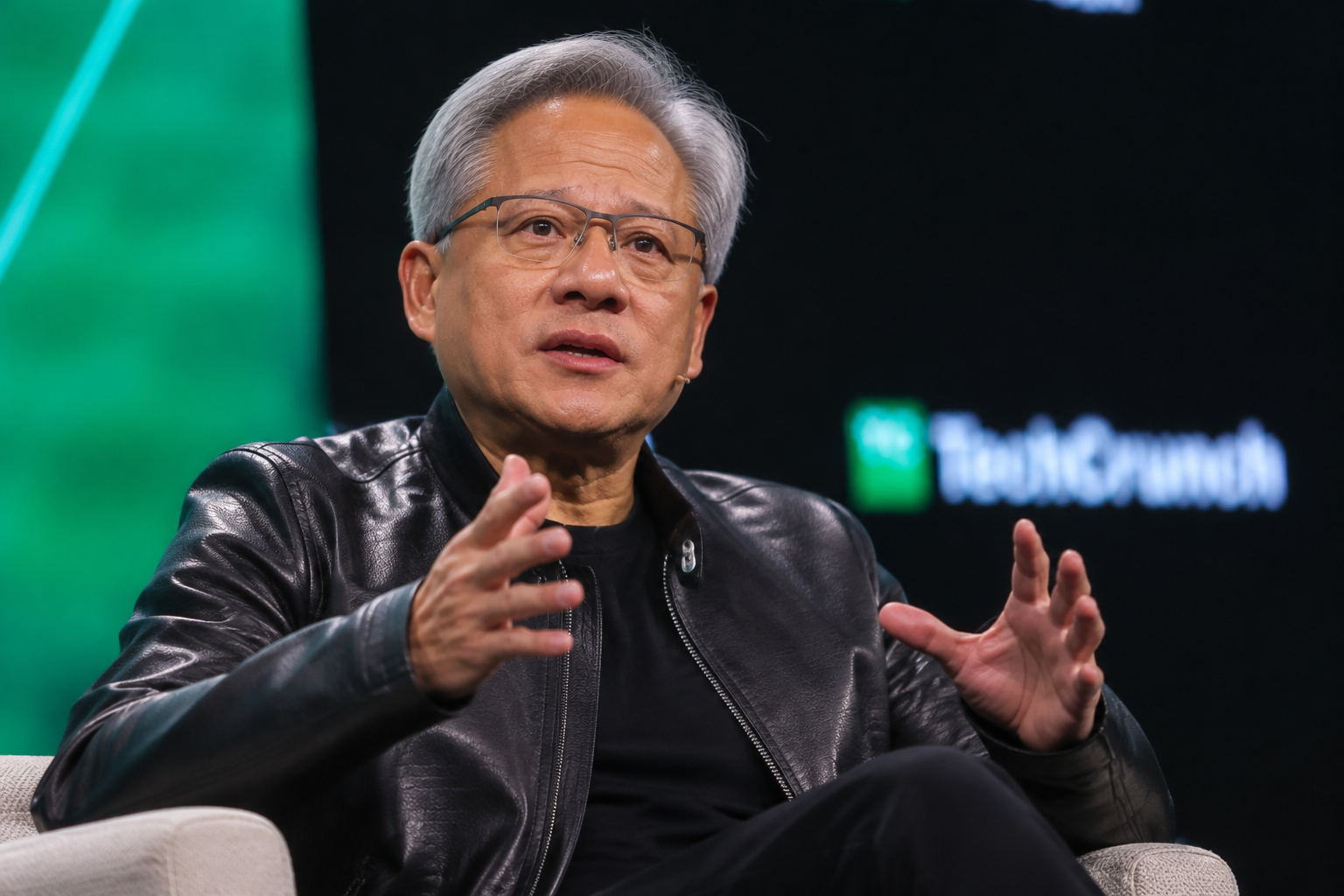
Shares of Nvidia were largely unchanged on Thursday, but the chipmaker continues facing questions from investors about whether it can maintain its dominance in artificial intelligence hardware as the market evolves beyond graphics processing units (GPUs).
Nvidia stock (NVDA) fell 0.12% in trading to $212.35, underperforming the broader S&P 500 and the Nasdaq Composite indices, with both surging by 1.5%.
Despite remaining one of Wall Street’s most closely watched AI companies, the stock has significantly underperformed the broader semiconductor sector this year.
Through Wednesday’s close, Nvidia shares had gained about 14% in 2026, trailing the 79% rise in the Philadelphia Semiconductor Index.
Part of the slower performance reflects Nvidia’s enormous size and widespread ownership among institutional and retail investors, making it increasingly difficult for even strong earnings results to generate outsized stock gains.
Nvidia faces growing competition beyond GPUs
The larger debate surrounding Nvidia centers on whether the company’s long-standing advantage in AI hardware can persist as artificial intelligence workloads evolve.
Nvidia built its market leadership through GPUs, which became the preferred chips for training advanced AI models.
However, investors are increasingly focused on whether future AI computing demand could shift toward a broader mix of processors, including central processing units (CPUs) and custom-built AI chips.
To address that shift, Nvidia recently introduced its stand-alone Vera CPUs.
The company estimates the products could generate as much as $20 billion in revenue this year and target a total addressable market worth roughly $200 billion.
Investors are now watching closely to see how Nvidia’s CPUs compete against rival offerings from Intel and Advanced Micro Devices.
Early benchmark results released this week by benchmarking company Phoronix showed encouraging signs for Nvidia’s new processors, though broader commercial comparisons are still pending.
“While the tests were curated by Nvidia at its Santa Clara headquarters, the early data from those tests indicate that Vera is highly competitive compared with AMD’s EPYC and Intel Xeon offerings, at least in the workloads Nvidia is targeting with the chip,” wrote Oppenheimer analyst Rick Schafer in a research note.
Full performance comparisons are not expected until Vera units are shipped to commercial partners.
Taiwan investment highlights AI supply chain strategy
Separately, Nvidia also announced a major expansion of its investment plans tied to Taiwan’s semiconductor ecosystem.
Chief Executive Jensen Huang on Wednesday said during an event in Taipei that Nvidia plans to spend approximately $150 billion annually with Taiwanese suppliers.
The announcement came during celebrations surrounding Nvidia’s new campus launch in Taiwan.
Huang noted that Nvidia is already spending roughly $100 billion annually in Taiwan, home to key manufacturing partner Taiwan Semiconductor Manufacturing.
The planned increase represents a dramatic rise from the estimated $10 billion to $15 billion Nvidia spent annually in Taiwan around five years ago.
Taiwan remains central to the global AI semiconductor supply chain due to its dominance in advanced chip manufacturing.
Nvidia’s growing spending commitments also signal continued confidence in AI infrastructure demand despite broader investor concerns surrounding supply chains and geopolitical risks involving Taiwan.
As AI computing expands across cloud services, enterprise software, and consumer applications, Nvidia remains one of the market’s most influential companies, even as investors increasingly scrutinize how long its competitive edge can last.
The post Why is Nvidia stock underperforming broader market today? appeared first on Invezz