
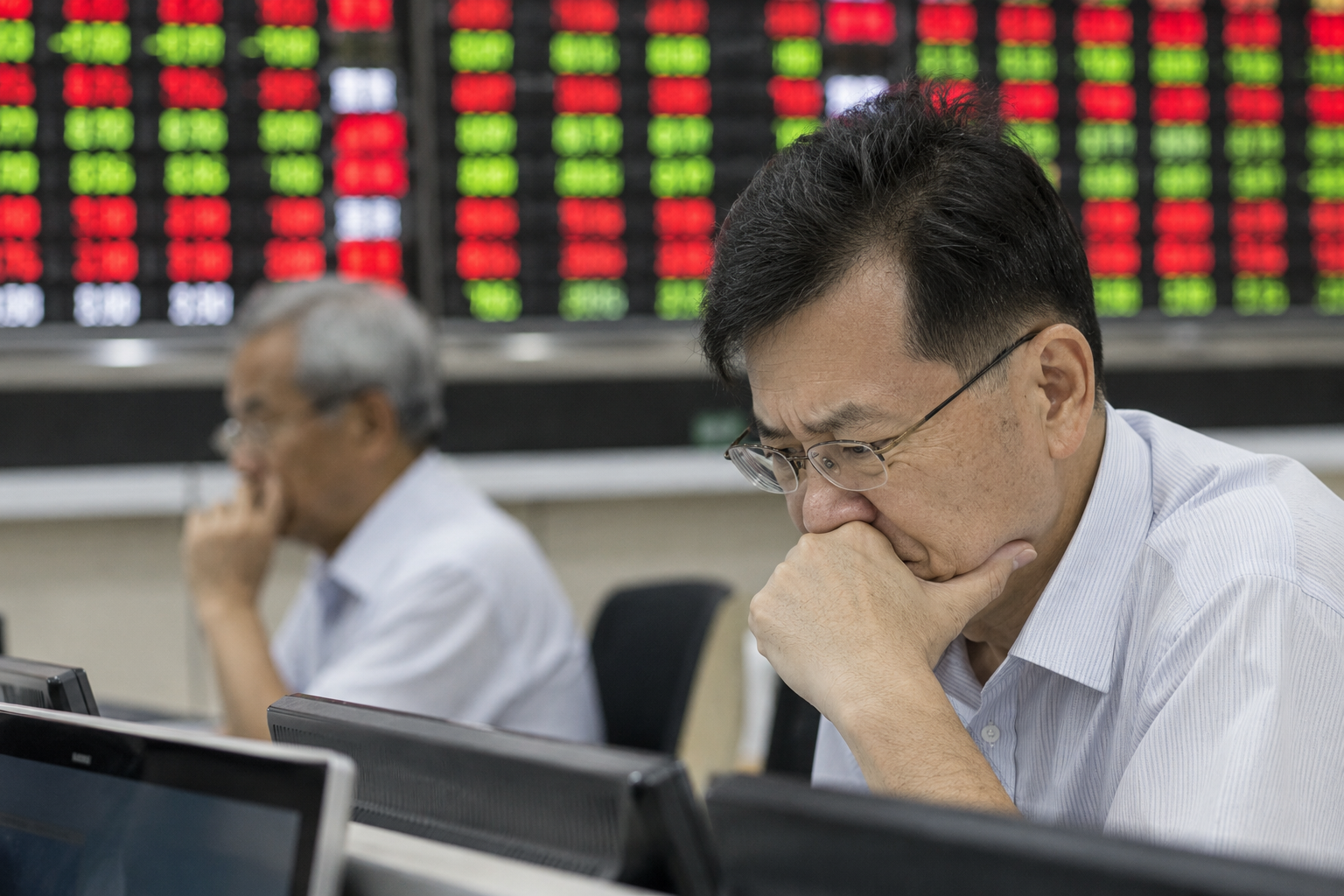
Share markets across Asia fell on Thursday after reports of fresh US military strikes on Iran and missile attacks linked to Kuwait unsettled investors and weakened optimism surrounding a possible peace agreement in the Middle East.
Oil prices surged while Treasury yields climbed as investors reacted to escalating tensions and growing concerns over inflation ahead of key US economic data.
The renewed hostilities added to the uncertainty surrounding peace negotiations after US President Donald Trump dismissed an Iranian report suggesting a deal had been reached to resume traffic through the Strait of Hormuz.
Oil prices rebound sharply
The US military said it had carried out fresh strikes targeting an Iranian drone operation.
Tehran, meanwhile, claimed it had attacked a US air base in Kuwait.
With shipping through the Strait of Hormuz still heavily disrupted, oil prices rebounded sharply.
Brent crude rose 3.6% to $97.71 a barrel, while US crude climbed 3.8% to $92.05.
The jump in oil prices added to concerns that inflation could remain elevated for longer, pushing Treasury yields higher.
Yields on 10-year US Treasury notes rose 4 basis points to 4.526% as investors adjusted inflation expectations higher due to sustained energy price risks.
The rise in yields also weighed on equity markets, particularly technology stocks that had previously led gains.
Japan’s Nikkei index fell 1.4%, while South Korean shares dropped 3.2%.
MSCI’s broadest index of Asia-Pacific shares outside Japan declined 2.1%.
Reports from Japan also indicated the government planned to issue bridging bonds to finance key programmes aimed at boosting investment and economic security.
European and US futures weaken
Market weakness extended into Europe and the United States.
EUROSTOXX 50 futures fell 1.2%, FTSE futures dropped 0.9%, and DAX futures declined 1.0%.
In the United States, S&P 500 futures eased 0.3%, while Nasdaq futures lost 0.8%.
Inflation data in focus
Investor attention has now shifted to upcoming US personal consumption expenditures (PCE) data, which includes the Federal Reserve’s preferred inflation measures.
Higher fuel costs are expected to push headline PCE inflation to a three-year high of 3.8%.
Core inflation is forecast to rise 0.3% monthly, lifting the annual rate to 3.3%, remaining well above the Fed’s 2% target.
The rise in inflation expectations has prompted some Federal Reserve officials to reconsider the central bank’s easing stance.
“With inflation well above target but the growth impact of the conflict still uncertain, the Fed faces genuine two-sided risk,” analysts at NAB said in a note.
Markets are currently pricing in a 50-50 chance of a quarter-point increase in the federal funds rate to a range of 3.75% to 4.0% by the end of the year.
Dollar strengthens as gold declines
Expectations of higher US interest rates supported the dollar, which traded at 99.506 against a basket of currencies.
The dollar also climbed to a four-week high against the Japanese yen at 159.65, approaching the 160 level that previously triggered intervention from Japanese authorities.
The euro fell 0.3% to $1.1590, though expectations of a possible interest rate increase by the European Central Bank offered some support to the common currency.
ECB Chief Economist Philip Lane said policymakers remained focused on preventing higher energy prices from feeding into broader inflation expectations.
Meanwhile, gold prices fell to $4,374 an ounce despite geopolitical tensions, suggesting limited demand for the metal as either a safe-haven asset or an inflation hedge.
The post Asian markets slide as Iran tensions lift oil prices and bond yields appeared first on Invezz