
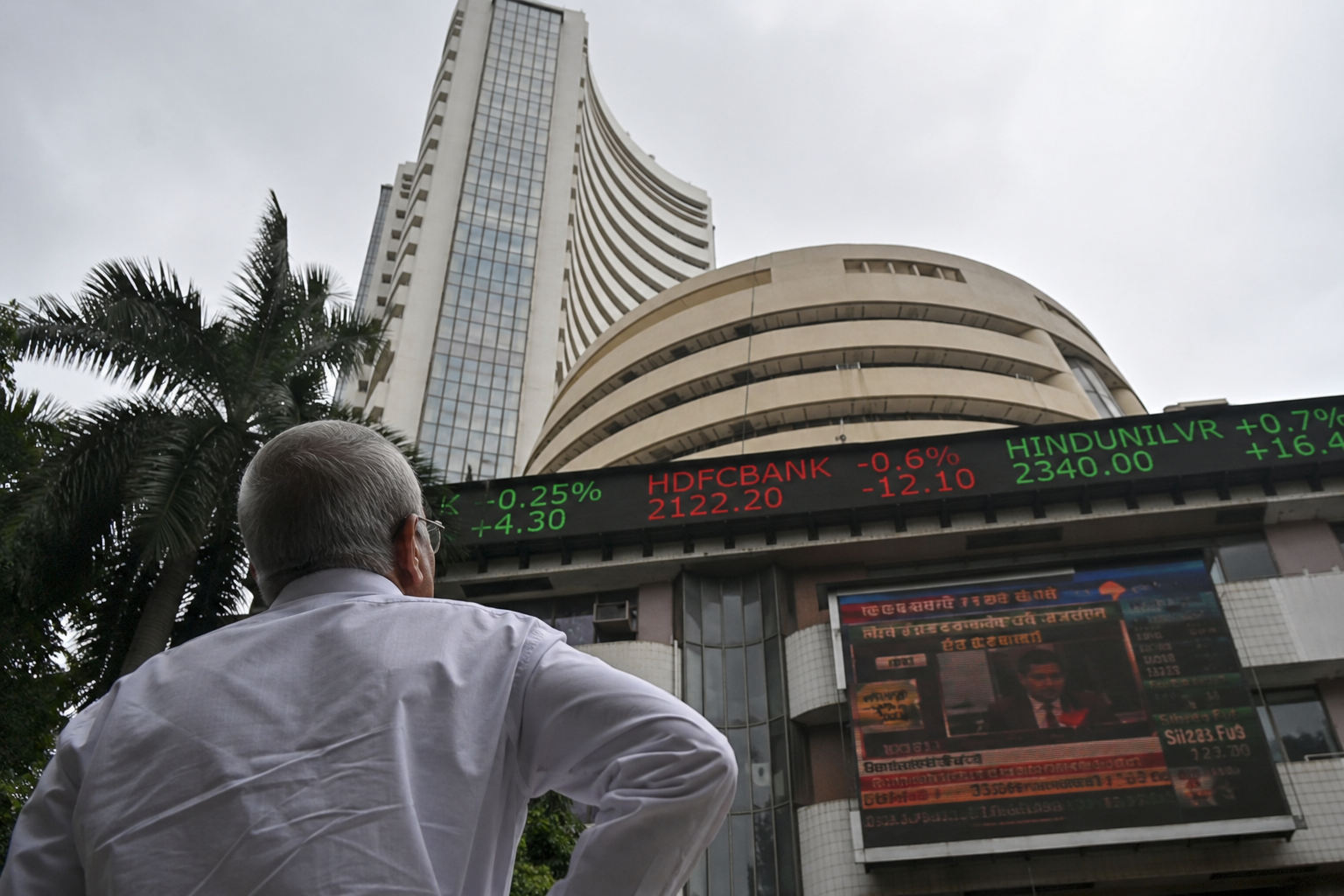
India’s position as the world’s fifth-largest equity market by capitalisation is under pressure as Taiwan rapidly closes the gap, driven largely by the strong rally in chipmaker Taiwan Semiconductor Manufacturing Co.
India’s equity market has emerged as one of the weakest-performing global markets this year.
The benchmark Nifty 50 and BSE Sensex have declined about 8.5% and 10.8%, respectively, amid weak annual earnings growth and limited exposure to artificial intelligence-related investments.
According to exchange data, the aggregate market capitalisation of companies listed on Taiwan’s stock exchange and OTC exchange stood at $4.89 trillion on Tuesday.
That was marginally lower than the $4.92 trillion market value of companies listed on India’s National Stock Exchange.
The United States, China, Japan, and Hong Kong currently occupy the top four positions globally by market value.
India loses favour among emerging market investors
Global fund-flow and investment trends tracker Copley Fund Research said in its May report that India has lost its earlier appeal among emerging market investors.
“India has moved from being the darling of emerging markets to the runt of the litter among Asia’s Big Four,” Copley Fund Research said, as cited in a Reuters report.
The report added that average weights in funds tracked by the firm have dropped to 9.94%.
It marked the first time India’s weighting fell below 10% since January 2021.
The figure also remains significantly lower than the peak of 17.47% recorded in August 2024.
Taiwan benefits from AI-driven momentum
Analysts said Taiwan’s sharp rise has been fuelled by strong investor interest in artificial intelligence and semiconductor-related businesses.
Shares of Taiwan Semiconductor Manufacturing Co have surged more than 44% so far in 2026.
The rally has helped Taiwan’s benchmark index Taiwan Weighted Index, climb 50.3% this year.
TSMC now accounts for around 42% of the benchmark index by market value, underlining the concentration of Taiwan’s equity market around semiconductor stocks.
Geopolitical risks add to pressure on India
Bhandari said geopolitical uncertainties have further accelerated foreign outflows from India.
He cited oil-price volatility, India’s dependence on imported energy, tensions between India and Pakistan, uncertainty surrounding US tariffs, and the risk of erratic monsoons as major concerns affecting investor sentiment.
Foreign portfolio investors have sold domestic stocks worth $24.18 billion so far in 2026, surpassing the record annual outflows seen in 2025.
In comparison, foreign inflows into Taiwan have reached nearly $25 billion this year.
India’s MSCI weight declines
India’s declining market capitalisation has also reduced its share in the MSCI Global Standard Index.
Its weighting in the index has fallen to 12.3% from a peak of 21% in September 2024.
The decline has further limited inflows into Indian equities as passive funds tracking the benchmark reduce their exposure.
Tuhin Kanta Pandey said Taiwan’s market concentration around a few major companies has helped attract foreign investment.
The post India risks losing fifth-largest market spot as Taiwan narrows gap appeared first on Invezz