
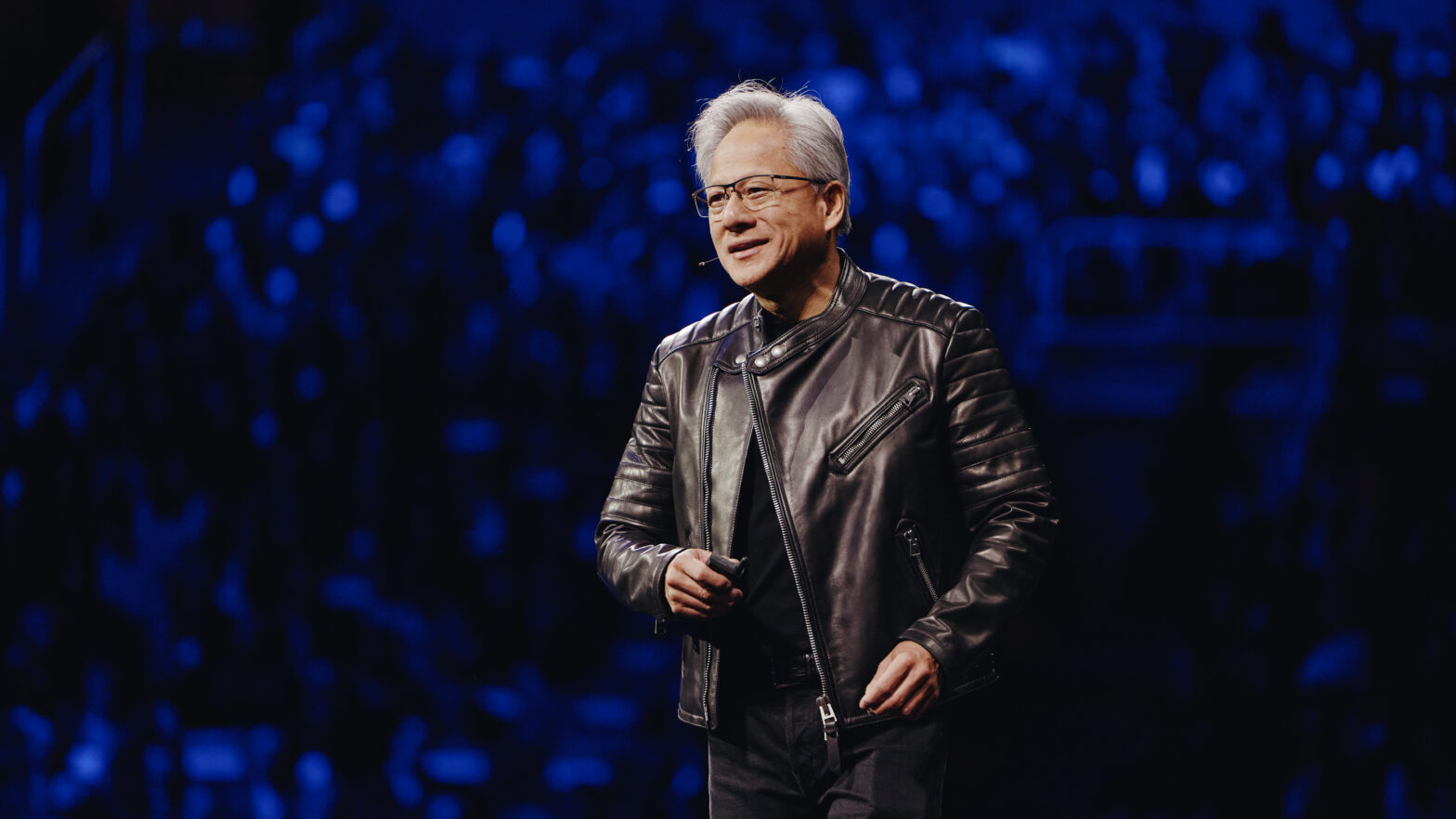
Nvidia Chief Executive Officer Jensen Huang said robotics could become the next major sector in South Korea, a brief but closely watched remark that points to the chipmaker’s expanding focus beyond data centres and into AI-powered machines.
Huang made the comment to reporters on Friday after arriving at Gimpo airport near Seoul on a flight from Taiwan.
While he did not provide detailed investment plans or name potential partners, the remark is likely to draw attention from investors tracking Nvidia’s role in the next phase of artificial intelligence adoption.
South Korea already plays a central role in the global technology supply chain through semiconductors, advanced manufacturing, electronics, autos and batteries.
Huang’s comment suggests he sees robotics as another area where the country could build scale, particularly as AI software, sensors and high-performance computing become more deeply embedded in machines used in factories, logistics, mobility and services.
Robotics becomes the next AI frontier
Huang’s view that robotics is South Korea’s next major sector fits with Nvidia’s broader argument that artificial intelligence is moving from the cloud into the physical world.
The first wave of the AI boom was dominated by data centres, large language models and the chips needed to train and run them.
The next stage is expected to involve AI systems that can understand their surroundings, make decisions and operate in real-world environments. That is where robotics becomes important.
For Nvidia, robotics is not just about humanoid machines.
It covers industrial automation, autonomous systems, warehouse robots, factory equipment, simulation tools, automotive software and AI-enabled machines that require powerful computing.
These areas create demand for chips, software platforms and developer ecosystems — all businesses where Nvidia wants to remain central.
South Korea has many of the ingredients needed for that shift.
Its largest companies operate in sectors where robotics and automation can have clear use cases, from carmaking and shipbuilding to electronics assembly and battery production.
The country also has deep engineering capacity and a strong manufacturing base, giving it a potential advantage as AI begins to move into physical industries.
South Korea’s industrial base matters
Huang’s remark is likely to resonate because South Korea is already one of Asia’s most important manufacturing economies.
Its companies are global leaders in memory chips, consumer electronics, displays, autos and batteries.
Many of those industries face rising pressure to automate production, improve efficiency and reduce dependence on labour-intensive processes.
That makes robotics a natural next step. In factories, AI-enabled robots can help with assembly, inspection, materials handling and quality control.
In logistics, they can support warehouse automation. In autos, robotics overlaps with autonomous driving, software-defined vehicles and smart manufacturing.
South Korea’s technology groups also have experience working at the intersection of hardware and software.
That could make the country a meaningful market for Nvidia platforms that combine chips, AI models, simulation and real-time processing.
The comment also comes as governments and companies across Asia look for ways to capture more value from the AI boom.
Data centres remain important, but countries are increasingly focused on how AI can upgrade domestic industries.
For South Korea, robotics offers a way to connect its manufacturing strength with the next phase of AI deployment.
The post Nvidia’s Jensen Huang hints at Korea’s next trillion-dollar AI opportunity appeared first on Invezz