
With SpaceX’s historic Nasdaq debut just a week away, ARK Invest is making a striking claim – the firm’s satellite internet division, “Starlink,” is big enough on its own to justify a near $2.0 trillion valuation.
That argument, put forward by ARK’s chief futurist Brett Winton, goes well beyond the usual IPO hype.
According to him, it is backed by “hard numbers” that paint a picture of a business whose growth trajectory may be unlike anything public markets have ever priced in.
ARK Invest’s bullish view on SpaceX ahead of IPO
Starlink is the primary driver of ARK’s valuation thesis, with a constellation that currently delivers about 500 terabits per second of bandwidth and generates nearly $14 billion in annual revenue.
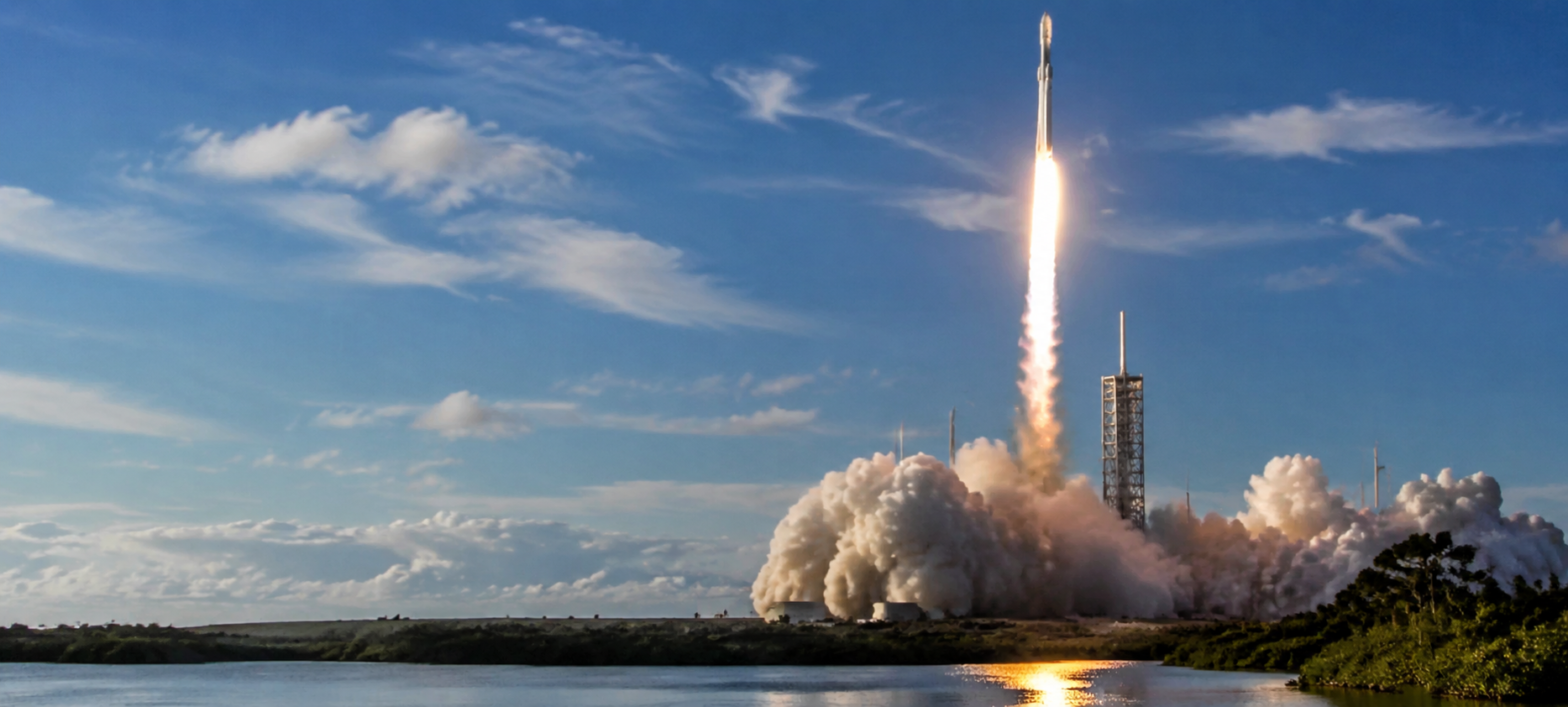
But the Starship rocket – if fully operational – could fundamentally alter how fast Starlink expands, Winton told CNBC in an interview today.
“With each Starship rocket, they can launch 60 terabits a second,” Winton explained. “Ten launches can duplicate their existing capacity in space.”
At that rate of bandwidth deployment, Starlink’s infrastructure could scale to hundreds of times its current size within a relatively short window.
The satellite internet brand has already surpassed 10 million active subscribers globally, with sales estimated to exceed $20 billion this year – a figure that renders even the boldest forecasts harder to dismiss.
ARK’s open-source SpaceX model yields an expected enterprise value of roughly $2.5 trillion by 2030, with a bull case reaching $3.1 trillion and a bear case of $1.7 trillion.
ARK Invest has significant skin in the game
On “Squawk Box”, Winton said SpaceX sits at the “intersection” of two of the most powerful tech forces of the decade: space infrastructure and artificial intelligence.
Companies developing and operating foundational AI models could collectively generate between up to $20 trillion in enterprise value by the end of this decade.
And SpaceX’s orbital capacity, through its recent merger with xAI, places it inside that opportunity, he added.
His research suggests that at sub-$100 per kilogram launch costs, orbital data centers could deliver compute at about 25% lower cost than terrestrial alternatives, avoiding grid interconnection delays, permitting friction, and power scarcity.
Elon Musk has stated ambitions to launch 100 gigawatts of AI computing capacity annually. “This historical moment is going to be looked back upon as the critical technological inflection, maybe in the history of humanity,” Winton said.
Note that ARK Invest is not delivering this analysis from the sidelines.
Private shares of SpaceX make up the largest holding of its Venture Fund, which has gained more than 70% over the past 12 months.
This makes ARK one of the most visible “pre-IPO” beneficiaries of SpaceX – a fact that adds both weight and scrutiny to its projections.
The post ARK Invest: Starlink alone is sufficient to command $2T valuation appeared first on Invezz