
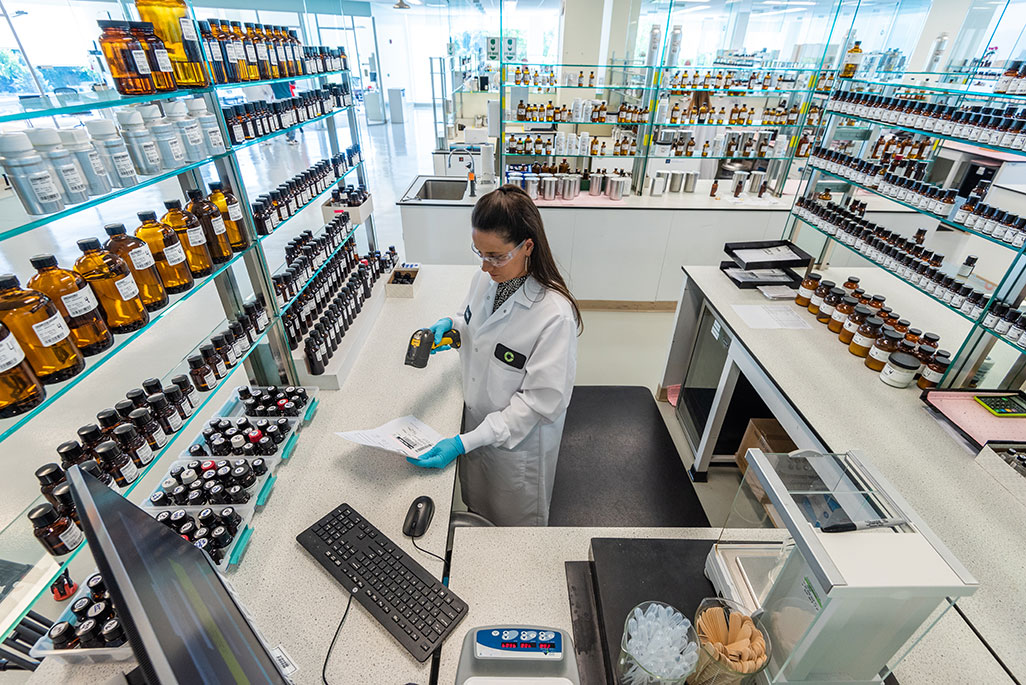
Swiss fragrance and flavour maker Givaudan reported stronger-than-expected first-quarter sales growth, supported by robust demand in its fragrance and consumer products segment.
The company said its LFL sales rose 2.8% in the quarter.
This excludes the impact of currency fluctuations, acquisitions, and disposals.
This figure came in above a company-compiled consensus forecast of 1.9%.
Analysts noted that the growth was driven almost entirely by higher volumes rather than pricing.
This suggests that underlying demand remained resilient across key segments.
Givaudan shares rose 5.6%, hitting their highest level in more than a month.
How did fragrance and beauty drive growth?
The company’s fragrance & beauty division emerged as the main growth driver.
Like-for-like sales in the segment increased 5.9%, beating the consensus estimate of 4.1%.
This division produces scents for perfumes and household products.
Growth was supported by strong demand across the deodent market and home care segments.
As reported by Reuters, JP Morgan analyst Celine Pannuti said the results “signal a good start to the year for fragrances and beauty.”
She added that the performance could provide a positive read-across for other beauty companies.
The continued strength in fragrances highlights a broader consumer trend favouring premium personal care and home products.
What weighed on the taste and well-being unit?
Despite strong performance in fragrances, Givaudan’s taste and well being division underperformed.
This segment supplies flavours for food and beverages.
Organic sales in the unit declined 0.4% during the quarter.
The sharpest drop was recorded in South Asia, the Middle East, and Africa, where sales fell 7.1%.
This weakness highlights uneven demand across regions and categories.
While consumer goods linked to beauty showed resilience, food-related segments struggled in certain markets.
The divergence between the two divisions has been visible since late 2022, with fragrance & beauty consistently outperforming taste & wellbeing.
How did currency impact overall results?
Givaudan’s sales fell 5.2% to 1.88 billion Swiss francs.
The decline was largely due to a 9.2% currency headwind.
The strengthening Swiss franc weighed heavily on reported revenues, offsetting underlying growth.
Currency fluctuations remain a key risk for global companies like Givaudan. Even strong operational performance can be overshadowed by adverse forex movements.
What is the outlook for pricing and margins?
Givaudan said it is implementing price increases in 2026 to offset rising input costs.
As mentioned in the Reuters report, Pannuti noted that this move points to “a progressive price acceleration in the coming quarters.”
This suggests that while volumes drove growth in the first quarter, pricing could become a more important lever going forward.
The company’s ability to pass on higher costs without affecting demand will be closely watched in the upcoming quarters.
What does this mean for investors?
Givaudan’s latest results reflect a mixed picture.
Strong demand for fragrances is supporting growth.
However, weakness in the food ingredients business and currency pressures remain challenges.
The company’s performance highlights the importance of portfolio diversification.
It also underlines shifting consumer demand trends across categories.
For now, the fragrance segment continues to lead the way.
The post Givaudan beats sales estimates as fragrance demand lifts shares appeared first on Invezz